The most reliable early signs of mold in a Houston home are a musty smell that keeps coming back, visible spotting on walls or ceilings, allergy symptoms that ease when you leave the house, and any leak or flood in the home’s history that was dried “eventually” instead of immediately. Houston’s climate does the rest. If two or more of those sound familiar, it is worth getting eyes on the problem before it gets bigger, because mold never stays the same size.
Why Houston homes grow mold so easily
Houston is humid roughly seven months of the year, and our homes fight that humidity with air conditioning that produces gallons of condensation every day. Add slab foundations that wick ground moisture, attics that hit 140 degrees and stress every duct connection, and the occasional tropical storm, and you have a city where mold does not need an invitation. It needs about 24 to 48 hours of moisture, which is the window the EPA uses for drying wet materials before mold takes hold. Most Houston mold problems trace back to a moisture source nobody fixed: a slow plumbing leak, a sweating duct, a roof penetration, or an AC system that cools the air without actually dehumidifying it.
10 signs you have mold in your house
1. A musty smell that keeps coming back
Active mold releases microbial volatile organic compounds, and your nose detects them long before your eyes find the colony. If a closet, bathroom, or bedroom smells earthy or musty no matter how much you clean, something is growing. Pay attention to where the smell is strongest. If it is coming from your supply vents when the AC kicks on, the growth may be inside the system itself, which is a different problem than mold on a wall. Our page on HVAC mold removal explains how that gets handled.
2. Visible spots or discoloration on walls, ceilings, or grout
Mold shows up as black, green, brown, gray, or even white patches, often with a speckled or fuzzy texture. Color alone tells you very little about the species or the risk. A small cluster of spots on a bathroom ceiling and a spreading stain on a bedroom wall deserve the same response: find out what moisture is feeding it.
3. Allergy symptoms that improve when you leave home
Congestion, itchy eyes, coughing, headaches, or asthma flare-ups that ease at work or on vacation and return within hours of walking in the door are a classic pattern. Your house should not be the place where you feel worst.
4. A leak or flood in the home’s history
Any past water event matters: a burst supply line, a water heater failure, a roof leak, or street flooding. If drying started more than a day or two after the water arrived, mold likely got a head start inside wall cavities where nobody could see it. We covered the timeline in detail in how fast mold grows after a leak, and if the water damage is recent, professional drying is the step that prevents remediation from ever being needed.
5. Condensation on windows, vents, or ductwork
Sweating surfaces mean the air around them is carrying more moisture than it should. Metal vent registers that drip, windows that fog on the inside, and ducts that leave water stains on attic insulation are all feeding potential growth.
6. Paint or wallpaper that bubbles, peels, or warps
Moisture trapped inside a wall pushes finishes off from behind. If a painted surface is bubbling with no obvious spill to blame, assume the wall cavity has a moisture problem until proven otherwise.
7. Dark or fuzzy growth around AC vents and returns
Spotting around supply registers is one of the most common things Houston homeowners show us, and it matters more than a spot on drywall. Your AC system moves air through the whole house many times an hour, so growth at the vents can mean the system is distributing spores to every room. This is the scenario where duct cleaning and mold work overlap, and it is the specific problem our HVAC mold removal service exists to solve.
8. Humidity that never feels under control
If the house feels sticky even while the AC runs constantly, the system may be oversized or failing to dehumidify. Indoor humidity that sits above 60 percent keeps every surface in the house closer to the moisture threshold mold needs.
9. Warped floors or baseboards pulling away
Wood and MDF swell when they absorb moisture from a slab or a hidden leak. Cupped floorboards, swollen baseboards, and trim separating from the wall are structural evidence of the same moisture that feeds mold.
10. One room that smells after every rain
A smell that appears within a day of rainfall and fades during dry weeks points to water intrusion through the envelope: flashing, a window seal, a slab edge. The mold is responding to the moisture cycle, and so should the repair.
What does black mold actually look like?
The mold people worry about most, Stachybotrys chartarum, typically looks dark greenish black, grows in flat patches rather than fuzzy mounds, and often has a wet or slimy sheen while it is active. It favors paper-faced materials like drywall that have stayed wet for a long time. Here is the honest answer, though: you cannot identify a mold species by eye, and remediation decisions should not hinge on color. Extensive growth of any species gets handled with the same engineering controls. If you need to know what you are dealing with, a proper mold inspection with lab sampling answers it definitively.
Real remediation vs. masking the problem
Houston has no shortage of companies that will “treat” mold in a single afternoon with a fogging machine and a coat of stain-blocking paint. The spots disappear, the invoice is small, and the mold returns within months because nothing that caused it was addressed. Fogging and encapsulation have legitimate roles inside a larger plan, but as a standalone fix they are cosmetics.
Licensed remediation looks different, and you can verify each step:
- The moisture source is found and fixed first. Remediation without a moisture fix is a subscription, not a repair.
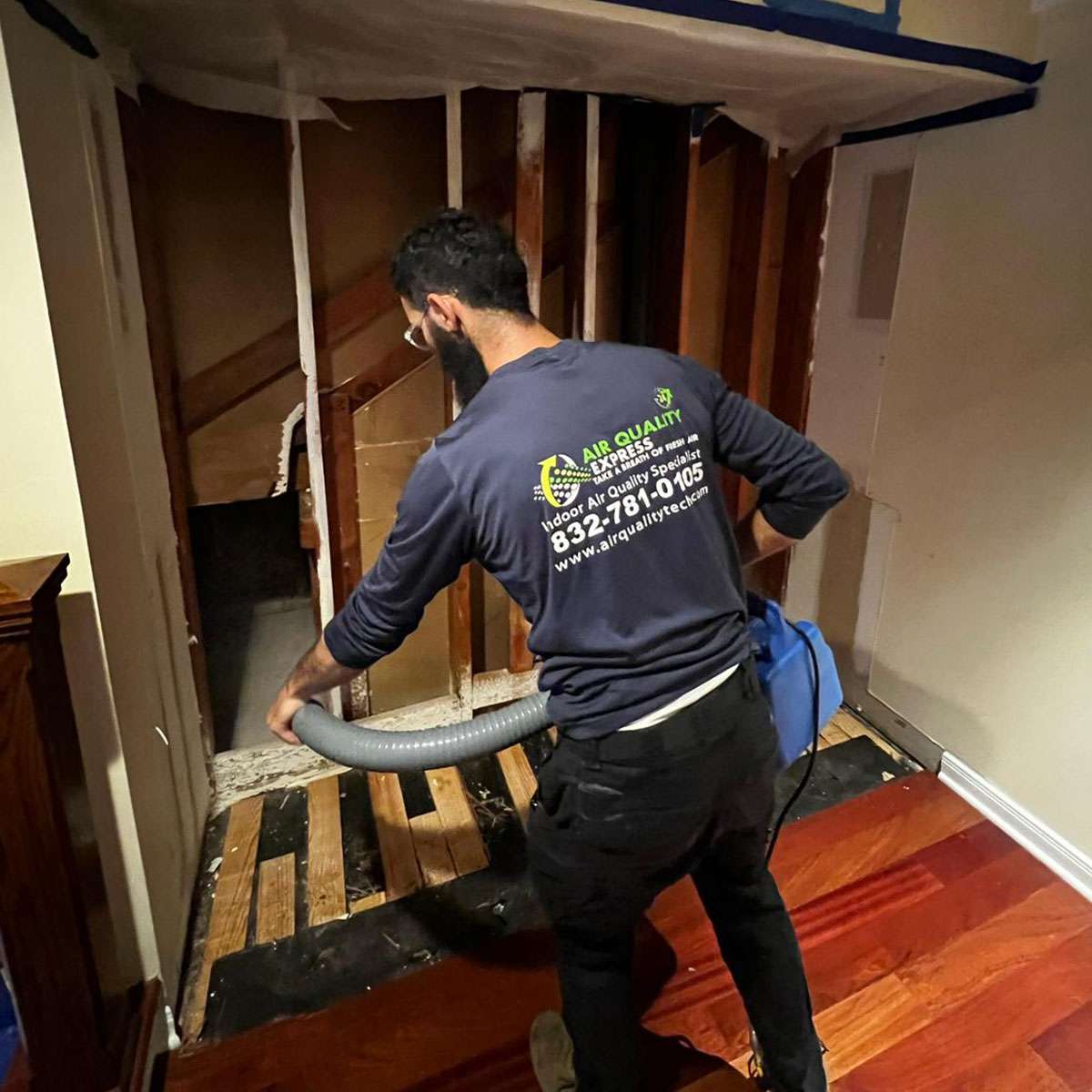
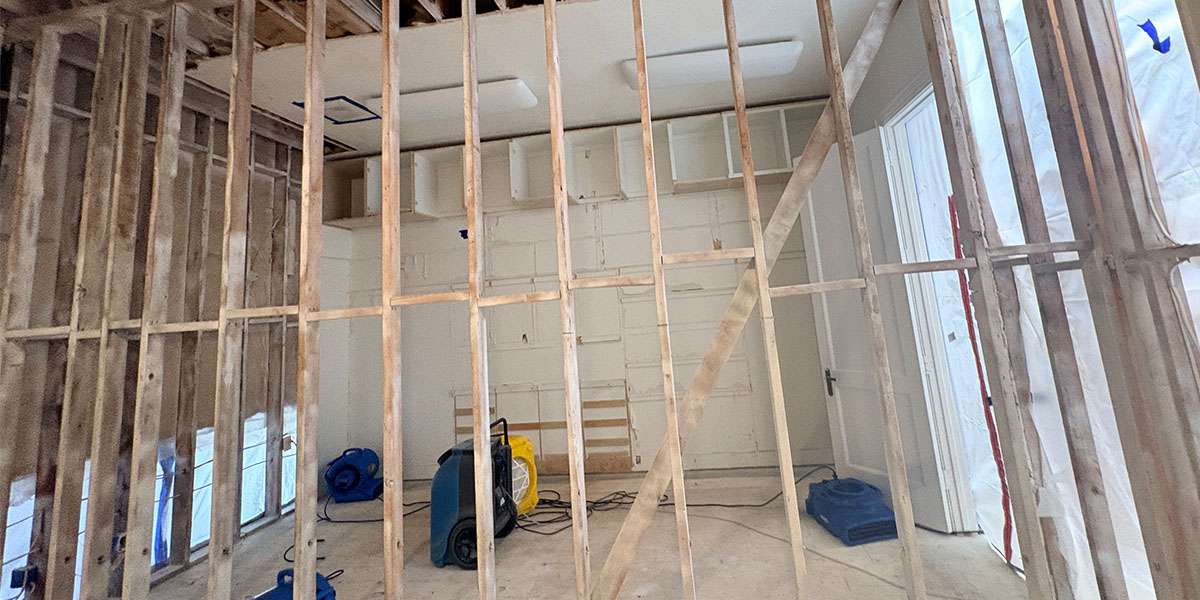
- The work area is contained under negative air pressure with HEPA filtration, so disturbing the mold does not spread spores through the rest of the house.
- Porous materials that are colonized get removed, not painted over. Drywall and insulation that have grown mold do not come back from a spray.
- The HVAC system is evaluated, because ductwork is the one pathway that touches every room in the house.
- Clearance is verified at the end. Texas requires an independent licensed mold assessor, not the remediation company itself, to confirm the work passed when a protocol is in place. The remediator and the assessor cannot be the same company, which protects you.
Texas law requires a licensed mold remediation contractor for any growth covering more than 25 contiguous square feet, and licensing is handled by the Texas Department of Licensing and Regulation. Air Quality Express holds Texas mold remediation license #RCO1553. After a passed clearance test, Texas homeowners can also receive a Certificate of Mold Damage Remediation, a state document that tells future buyers and insurers the problem was fixed properly. A fog-and-paint job cannot produce one.
When mold is an emergency
Call the same week, not next month, if mold appears alongside active water intrusion, if growth is visible at multiple AC vents at once, if anyone in the home is immunocompromised, elderly, or an infant, or if the water involved was sewage. While you wait: close the door to the affected room, set your thermostat fan to AUTO instead of ON so the system is not circulating air constantly, and do not point fans at the growth or scrub it dry, both of which launch spores into the air.
What it costs
Remediation pricing in Houston is driven by scope: how large the affected area is, whether contents and HVAC are involved, and what containment the layout requires. A contained single-room problem and a whole-home remediation after flooding are different projects, which is why we quote from an inspection rather than over the phone. Our guide to mold remediation cost in Houston breaks down the real scenario ranges.
Think you are seeing the signs?
Trust the pattern, not any single symptom. If the smell, the spots, or the symptoms are there, the moisture is there too. Air Quality Express handles inspection, licensed mold remediation, and the HVAC side of the problem under one roof, serving the greater Houston area. Reach out and tell us what you are seeing, and we will tell you honestly whether it needs testing, remediation, or just a fixed leak and a dehumidifier.