
Mold in Your Ducts, Vents & AC System
Air Duct & HVAC Mold Removal
Your Ducts
Spread It
Why Mold in Air Ducts Is Different
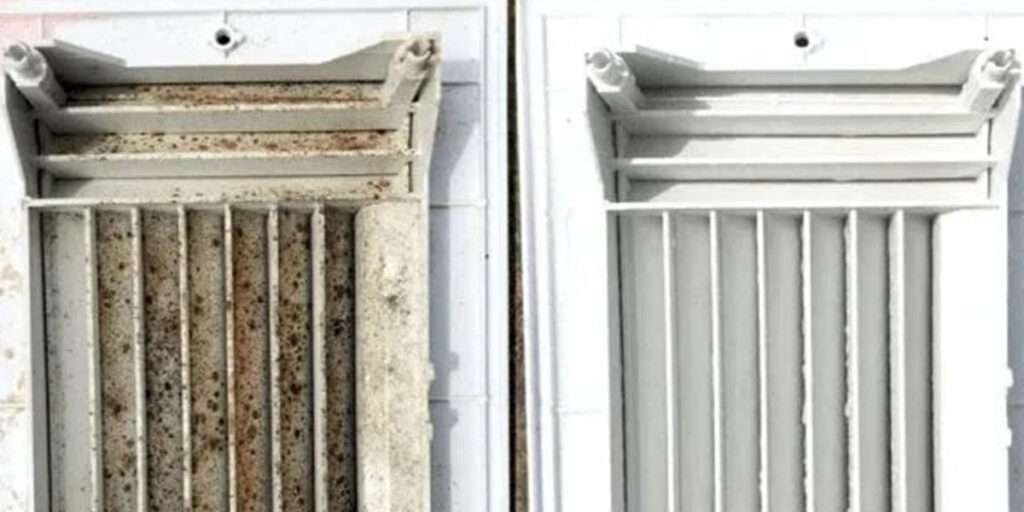
Mold in your air ducts or HVAC system does not stay put. Whether growth starts on the evaporator coil, inside the air handler, or on the lining of the ductwork itself, every cooling cycle pushes spores through the supply vents into every room of the house. Mold in AC ducts is a system problem, not a vent problem. That is why homeowners usually notice it the same way: a musty smell from the vents when the AC kicks on, or black spots forming on vent covers. Wiping mold off the vents does not fix it. The vent is the exit, not the source. Real air duct mold removal means finding where growth actually lives (ducts, coil, blower, drain pan, or plenum), containing the system so spores do not spread during cleaning, removing the contamination at its source, and correcting the moisture problem that caused it. Air Quality Express does this every day across Greater Houston with licensed mold remediation technicians (TDLR License #RCO1553) who inspect the entire air path before recommending anything.
Get A Quote today!
What It
Looks Like
Signs You Need Air Duct Mold Removal
Mold in air vents, air conditioner ducts, and HVAC systems announces itself if you know what to look for. A musty, earthy odor that gets stronger when the system turns on. Mold on vents you can see: black or dark green specks on vent covers and grilles that come back after wiping. Visible growth inside the air handler cabinet or around the coil. Allergy symptoms like sneezing, coughing, and irritated eyes that ease when you leave the house. Recurring dust-like discoloration around supply registers. In Houston’s humidity, the usual culprits are coil condensation, clogged condensate drains, duct leaks pulling in humid attic air, or oversized systems that do not dehumidify properly. If contamination has moved past surface dust into the ductwork or internal components, cleaning the vents alone will not stop it. The system needs proper mold removal.
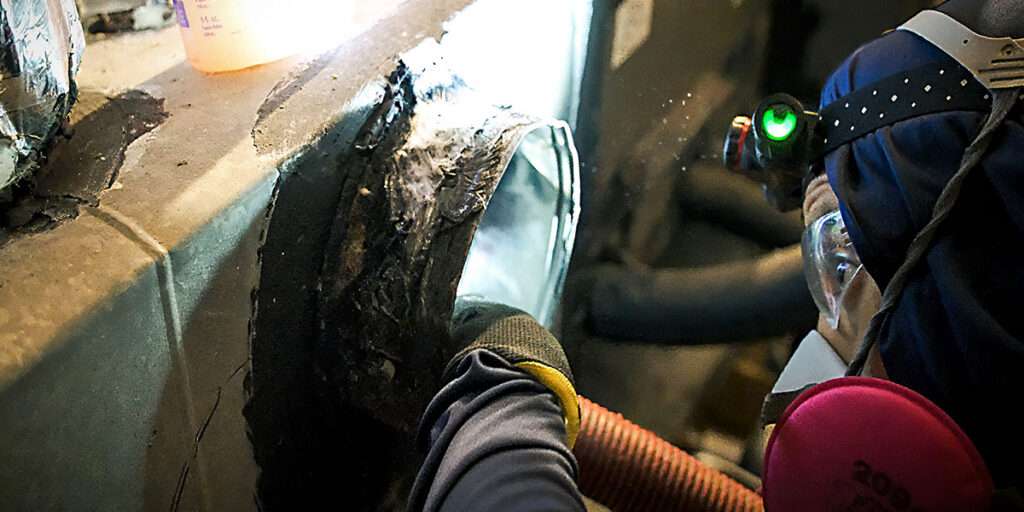
Air Duct Mold Removal
Mold inside ductwork, whether flex duct, duct board, or metal, requires containment and HEPA source removal, not a spray-and-wipe at the vents. We clean what can be cleaned and replace duct sections that cannot. This covers mold in air ducts, mold in air vents, and mold in air conditioner ducts.
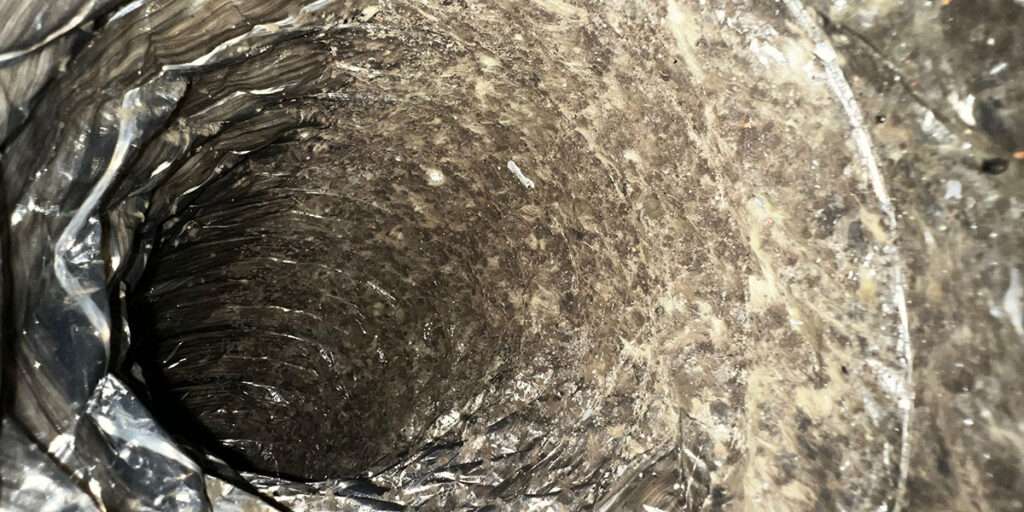
Air Handler & Coil Mold Cleaning
AC coil mold forms where condensation sits, on the evaporator coil or inside the air handler cabinet. Targeted cleaning restores the system’s hygiene at the source, and we check the drain pan and condensate line while we are in there.

Contaminated Component Removal
Fiberglass duct liners, internal insulation, and duct board that are deeply colonized cannot be reliably cleaned. We remove and replace them, and tell you the difference honestly.
Moisture Source Correction
Killing mold without fixing the condensation, drainage, or humidity problem guarantees it returns. Every job includes finding and correcting the moisture source. We do not mask the problem.
Quick Answers
Frequently Asked Questions About Air Duct & HVAC Mold Removal
How do I get mold out of my air ducts and vents?
Not with a rag and a spray bottle. Visible mold on a vent cover is the exit point, not the colony. Proper air duct mold removal follows a sequence: inspect the full air path (ducts, coil, air handler, drain pan) and document what is found with photos; contain the system under negative pressure with HEPA filtration so spores do not spread; physically remove contamination with HEPA vacuuming and mechanical agitation; apply an EPA-registered antimicrobial to affected components; replace any duct material too colonized to clean; and correct the moisture source. If a company skips the inspection or the moisture step, the mold comes back.
Is air duct mold removal different from general mold remediation?
Yes. Air duct and HVAC mold removal targets contamination inside the mechanical system (ductwork, air handler, evaporator coil, blower, drain pan, and plenums) using containment and HEPA-filtered equipment designed for airflow pathways. General mold remediation deals with building materials like drywall, framing, and flooring. In Texas the distinction has legal weight: when mold affects larger areas of building surfaces (generally more than 25 contiguous square feet), the project requires a TDLR-licensed assessment and remediation process. Air Quality Express handles both, and we will tell you plainly which one your situation actually requires.
Can mold in my air ducts spread through the whole house?
Yes. It is one of the fastest ways mold spreads through a home. Every time the blower runs, air passes over contaminated ducts or components and spores push through the supply vents into every connected room. That is why a musty smell that gets stronger when the AC kicks on is such a telling symptom, and why mold in the air system should be addressed promptly rather than watched.
Is black mold on vent covers dangerous?
Dark growth on vent covers is common in Houston and is not automatically toxic “black mold.” Several species look identical, and even Stachybotrys requires lab analysis to confirm. What the spots reliably tell you is that moisture and spores exist inside the system, and for people with allergies or asthma, circulating spores of any species can trigger symptoms. Wipe it off and it usually returns within weeks, because the source is inside. Worth a proper inspection rather than panic, but not worth ignoring.
I’ve got a musty smell coming from my vents, could it be mold?
It is one of the most common signs, especially with Houston humidity. A musty odor that returns after filter changes, or gets stronger when the system turns on, often points to microbial growth on the evaporator coil, in the drain pan, or inside lined ductwork. It is not guaranteed to be mold; trapped moisture and settled debris can smell similar. That is why we start with a documented inspection of the air handler, coil, and ducts rather than a guess over the phone.
How much does air duct mold removal cost in Houston?
Duct and HVAC system cleaning in Houston realistically runs $300–$2,100 per AC unit depending on scope. A first-time, full-system cleaning typically starts around $1,125 per unit; confirmed mold with antimicrobial treatment and encapsulation pushes toward the upper end, and replacing contaminated duct sections adds material cost. Maintenance visits on previously serviced systems cost less. For a full breakdown of duct cleaning prices, including how mold changes the scope, see our air duct cleaning cost guide. We provide a written, itemized scope after inspection, never a phone quote that doubles once a technician is on-site.
Do I need mold testing before removal?
Not always. Texas rules require a licensed mold assessment for larger projects, but many HVAC and duct cases (where growth is visible and limited to system components) can proceed directly to remediation. During our inspection we document what we find with photos and tell you honestly whether your project needs a formal assessment first. If it does, that assessment must come from an independent TDLR-licensed mold assessment consultant, not from us. Texas law separates the two roles to protect you.
Can moldy flex duct be cleaned, or does it have to be replaced?
It depends on the material. Metal duct, air handler cabinets, and coils can almost always be cleaned in place during air duct cleaning with HEPA vacuuming and EPA-registered antimicrobial treatment. Flex duct with mold on the inner liner and saturated duct board are usually replacement candidates. The porous surfaces cannot be reliably cleaned, and encapsulating heavy growth just buries the problem. Fiberglass-lined metal duct falls in between: light growth can often be HEPA-vacuumed, treated, and encapsulated, while deep colonization means replacement. We make that call during inspection, with photos, so you can see the reasoning yourself.
Will my HVAC system need to be replaced because of mold?
Usually not. Mold on the coil, in the drain pan, or in the cabinet is cleanable. That is routine work for us. Replacement conversations only happen when a system has a chronic design problem (like an undersized return starving airflow, or persistent condensation from an oversized unit) that will keep regrowing mold no matter how well it is cleaned. Even then, the moisture fix is often mechanical, not a new system.
What’s the difference between air duct cleaning and mold remediation?
Air duct cleaning removes dust and debris using mechanical agitation and negative-pressure HEPA collection. It is maintenance for the system. Mold remediation is a corrective process: containment, source removal, antimicrobial treatment, and correction of the moisture problem that caused the growth, verified with documentation afterward. If a company quotes you a “duct cleaning” for a mold problem without ever discussing moisture, you are likely paying for the problem to come back.
Who do I call for emergency mold removal in Houston?
Call us at (832) 781-0105. Air Quality Express takes emergency appointments 24/7 across Greater Houston, and same-week service is available for most of the metro. Mold emergencies are usually water emergencies: an AC condensate overflow, a roof or slab leak, or flood aftermath where growth is spreading visibly. The faster the moisture is stopped and the affected materials are contained, the smaller the remediation bill. Waiting a month can turn a coil cleaning into a duct replacement.
Are you licensed to perform mold remediation in Texas?
Yes. Air Quality Express holds Texas Mold Remediation Contractor License #RCO1553, issued by the Texas Department of Licensing and Regulation (TDLR), and our duct cleaning follows NADCA source-removal standards. You can verify any Texas mold license yourself through the TDLR online license search before hiring a contractor. We encourage every homeowner to do exactly that.
Do you just treat the mold, or fix what caused it?
Treating mold without fixing the moisture is masking the problem. It will come back. Mold does not grow in dry conditions, so every remediation we perform includes identifying and correcting the moisture source: a clogged condensate drain, coil condensation, duct leaks pulling humid air, or humidity the system is not managing. We finish with before-and-after photos and written confirmation of what was done, so you have proof the source was addressed, not sprayed over.
What areas do you serve for air duct mold removal?
All of Greater Houston, including Pearland, Katy, Cypress, Sugar Land, Spring, The Woodlands, Conroe, Tomball, Magnolia, Missouri City, Richmond, Fulshear, League City, Friendswood, Pasadena, Bellaire, Memorial, the Heights, and Central Houston, from our Houston (8990 Park W Dr) and The Woodlands offices. Same-week appointments are available for most of the metro area, and emergency visits can be scheduled 24/7.
What kills mold in air ducts?
EPA-registered antimicrobials kill mold on contact, but chemicals alone are not a fix. Anything sprayed into a duct still leaves the dead growth, the debris it fed on, and the moisture that will grow it back. Effective work is physical first: HEPA-filtered source removal and mechanical agitation to take the contamination out of the system, then antimicrobial treatment of what remains, then correction of the moisture. Be cautious of anyone selling fogging or ozone as the whole service. Ozone in particular is a lung irritant at the concentrations that would affect mold, and it does nothing about the material the mold is growing on.
Can I clean mold out of my AC ducts myself?
You can wipe a vent cover, and for a small spot of surface growth that is sometimes all it is. What you cannot do from the register opening is see or reach the coil, the drain pan, the blower, or the interior of the duct run, which is where growth usually originates. The bigger risk is that a shop vacuum and a brush aerosolize spores into the living space without containment, which spreads the problem rather than removing it. If wiping the vents has not held for more than a few weeks, the source is deeper in the system and it is worth an inspection.
How long does air duct mold removal take?
Most residential air duct and HVAC mold work is one day on site. A coil and air handler cleaning with a single duct run can be a half day. Whole-system remediation with containment, duct section replacement, and antimicrobial treatment runs a full day or occasionally two. Air scrubbers sometimes stay running after the crew leaves. We give you the expected duration in the written scope after inspection, not a guess on the phone.
Do I need to leave the house during air duct mold removal?
Usually not. The work area is contained under negative pressure with HEPA filtration specifically so the rest of the house stays usable. You will be without air conditioning for the hours the system is open, which matters in a Houston summer, and there is equipment noise. Households with someone who has asthma, a significant mold allergy, or a compromised immune system sometimes prefer to be out for the day. We will tell you honestly which category your job falls into.
How do I choose a mold removal company in Houston?
Ask for the TDLR license number and verify it yourself on the TDLR online license search before anyone starts work. Then ask three questions that separate real mold remediation from a spray job. First, what is the moisture source and how will it be corrected, because mold that regrows was never remediated. Second, what is being contained and how, since work without containment spreads spores. Third, what will you receive in writing afterward, meaning photos, a scope of what was removed, and what was treated. Be wary of free mold testing offered by the same company that wants to do the removal. On larger jobs Texas requires the assessor and the remediator to be independent, and that separation exists to protect you from scope inflation.
Does homeowners insurance cover mold in the HVAC system?
Sometimes, and it depends almost entirely on the cause rather than the mold itself. Mold resulting from a sudden covered event, such as a burst supply line or storm damage, is more often covered. Mold from long-term humidity, a slow leak, or deferred maintenance is usually excluded, and many Texas policies carry a specific mold cap. Documentation is what decides these claims, so we photograph conditions before and after and provide a written scope you can hand to an adjuster. We work for you rather than for a carrier, and payment for our work does not depend on a claim being approved.
How often should air ducts be checked for mold in Houston?
There is no fixed interval that fits every home, and any company quoting one is guessing. Houston humidity means the conditions for growth exist most of the year, so the practical trigger is symptoms rather than the calendar: a musty smell when the system runs, growth reappearing on vents, a condensate drain that has backed up, or any water event involving the attic or air handler. If your system has been serviced before and nothing has changed, a visual check at annual HVAC maintenance or routine air duct cleaning is usually enough.
Is mold on the AC coil serious, and is cleaning it enough?
The coil is the most common place mold starts in a Houston system, because it is wet by design every time the unit runs. Growth there is usually cleanable in place, so on its own it is not alarming. What matters is why the moisture is not draining. A clogged condensate line, a rusted or standing-water drain pan, an oversized unit short-cycling without dehumidifying, or restricted airflow will all put the growth straight back within a season. Cleaning the coil is the easy half. Fixing the drainage or airflow condition is the half that determines whether you call us again next year.
Air Duct Mold Removal
Removes mold from ductwork, vents, and airflow pathways at the source.
- Containment of the air system under negative pressure
- HEPA source removal from ducts and internal surfaces
- Replacement of contaminated flex duct or liners
Coil & Air Handler Deep Clean
Focuses where condensation and moisture commonly accumulate.
- Evaporator coil and cabinet cleaning
- Drain pan and condensate line inspection
- Moisture condition evaluation
Parts Upgrade
Some materials inside the system cannot be safely cleaned.
- Removal of colonized liners and duct board
- Replacement of affected duct sections
- Restoration of system integrity
Inspection & Honest Advice
Every removal begins with a full system evaluation.
- On-site assessment with photo documentation
- Clear explanation of findings
- A written, itemized scope, and a straight answer if you do not need us