If you’ve noticed a persistent musty odor coming from your vents, visible discoloration around supply registers, or allergy-like symptoms that worsen when your HVAC runs, mold inside the unit may be a legitimate concern. Houston’s climate makes this more common than in most U.S. cities: high humidity, warm temperatures, and condensate drain issues create ideal conditions for microbial growth inside air handlers, coil cabinets, and ductwork.
Before you call the first air duct cleaning company that appears in a search, there are several things worth understanding. This guide covers what a proper service looks like, how much it should cost, and what separates a top-rated provider in Houston from one that will take your money and leave the problem unsolved.
1. Cleaning Alone Will Not Fix Mold If the Moisture Source Is Still Active
This is the single most important point. Mold does not grow in dry conditions. If mold is present inside your HVAC unit or air ducts, something is producing excess moisture: a clogged condensate drain, coil condensation, a refrigerant leak, or high indoor humidity that the system is not managing effectively.
Any company that cleans the ducts or sprays a biocide without identifying and correcting the moisture source is providing an incomplete service. The mold will return. A qualified provider will assess the moisture cause and give you a correction plan alongside the cleaning scope.
2. Know the Signs That Mean It’s Time to Act
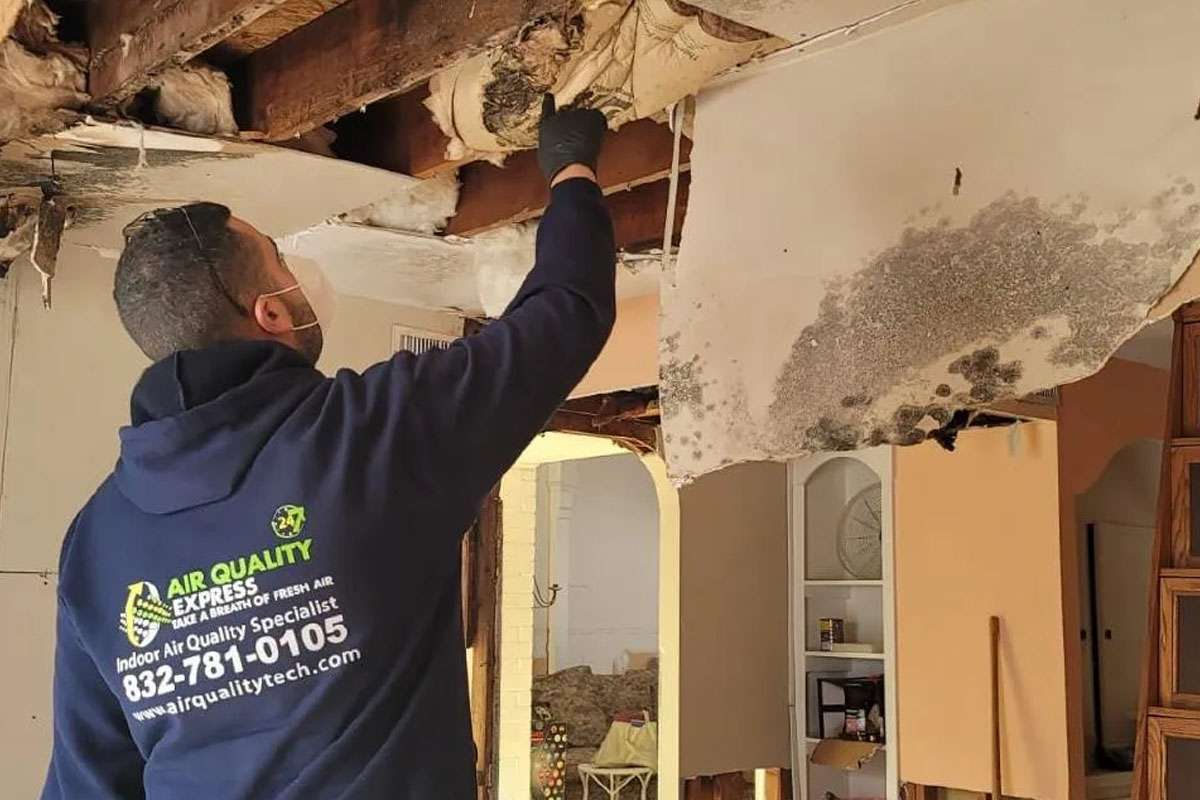
The clearest indicators that HVAC mold needs professional attention are visible mold growth inside ducts or on HVAC components, and a persistent musty odor that remains after filter changes. Water stains around supply or return registers, condensation on grilles, and allergy symptoms that flare when the system runs are also strong signals in Houston’s climate.
If you can see growth or the odor keeps coming back after a fresh filter, don’t wait — mold inside a running air system spreads spores every time the blower kicks on. A documented mold inspection will confirm what you’re dealing with and how far it extends.
3. Fiberglass Duct Liner and Duct Board Require a Professional Assessment
Many Houston homes have internally lined flexible ducts or duct board with fiberglass insulation on interior surfaces. Whether contaminated lined duct can be restored or needs replacement depends on how deep the contamination goes.
In many cases, lined duct and duct board can be effectively treated: HEPA vacuuming to remove surface contamination, followed by an EPA-registered antimicrobial treatment and encapsulation to seal the surface. When the insulation is deeply saturated or structurally degraded, air duct replacement is the better course. That determination should be made by a trained mold technician during inspection — with photo documentation — not guessed at over the phone. Make sure any written quote states clearly which sections will be treated and which, if any, will be replaced.
4. Proper Cleaning Requires Agitation and Continuous Negative-Pressure HEPA Vacuum Capture
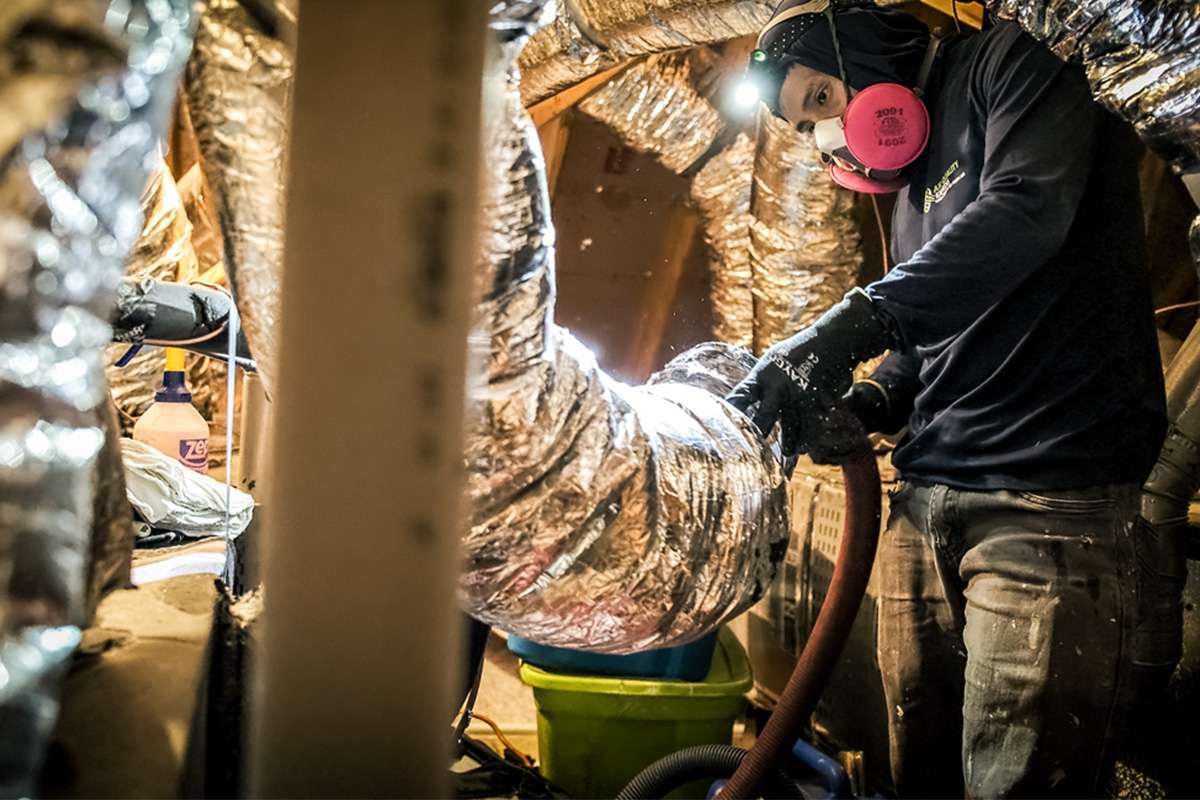
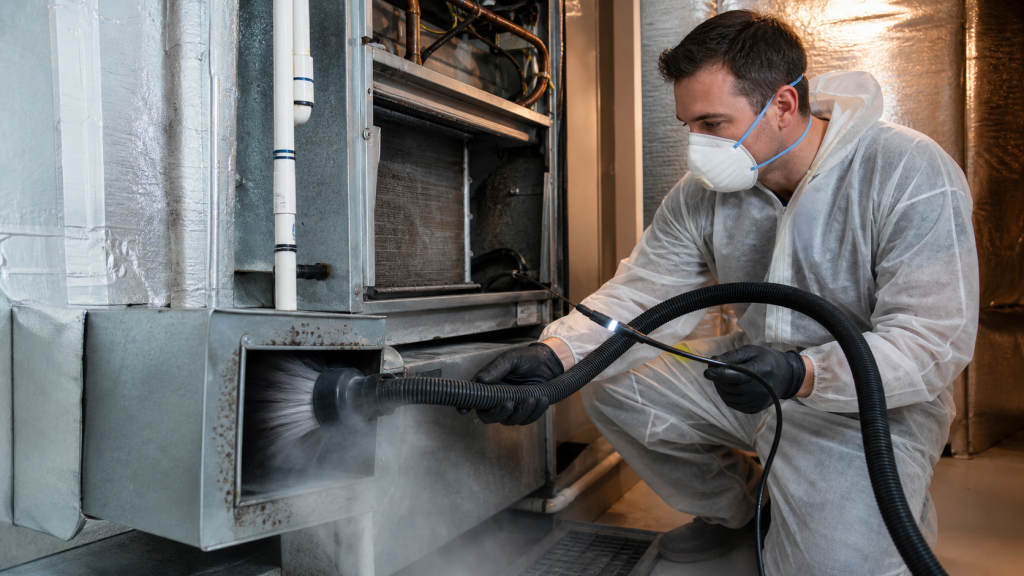
According to the National Air Duct Cleaners Association (NADCA), proper cleaning methods involve two core elements: mechanical agitation to dislodge contaminants and continuous negative-pressure collection using a HEPA-filtered vacuum system. This keeps dislodged debris from being redistributed through the home.
NADCA also specifies that air duct cleaning should cover the entire HVAC system, not just accessible registers, because partial cleaning of only some components can lead to recontamination of the sections that were cleaned. Ask any prospective provider to confirm they use negative-pressure HEPA equipment and that their air duct services scope covers the full system, including the air handler, coil cabinet, drain pan, and ductwork.
5. Fogging and Chemical Biocides Are Not a Substitute for Mechanical Cleaning
One of the most common air duct cleaning scam red flags in Houston is a company that leads with “mold-killing fogging” or encapsulant sprays as the primary or only solution. NADCA guidance is explicit: EPA-registered antimicrobial products may be appropriate in some circumstances, but only after mechanical source-removal cleaning has been completed, never as a substitute for it.
Fogging alone leaves the physical contamination in place. It may reduce surface counts temporarily, but without removing the debris and addressing moisture, regrowth is predictable. If a contractor cannot clearly describe their mechanical cleaning process before mentioning any chemical treatment, treat that as a meaningful red flag.
6. Know the Difference Between Duct Cleaning and Licensed Mold Remediation
These are not the same service, and in Texas, the distinction has regulatory weight. Standard air duct cleaning addresses contamination inside metal ductwork and HVAC components. Licensed mold remediation involves a formal assessment and remediation process governed by the Texas Department of Licensing and Regulation (TDLR).
For mold inside an HVAC unit or limited areas of ductwork, a qualified provider of HVAC mold removal can often address the scope without triggering formal remediation licensing requirements. However, if mold extends to surrounding building materials (walls, ceilings, subfloor), the scope may require a TDLR-licensed mold assessment contractor and a licensed mold remediation contractor. When in doubt, ask your provider directly whether the work they are scoping falls within or outside of licensed remediation requirements under Texas rules.
7. What Houston Air Duct Cleaning Actually Costs (So You Are Not Overcharged)
Pricing for air duct cleaning in Houston varies widely based on the number of AC units, duct type, contamination severity, and accessibility. Realistic ranges run $300–$2,100 per AC unit depending on scope:
- First-time, full-system cleaning: typically starts around $1,125 per AC unit. A first cleaning covers the full system — air handler, coil cabinet, drain pan, and ductwork — and takes considerably more labor than a touch-up.
- Cleaning with confirmed mold, antimicrobial treatment, and encapsulation: toward the upper end, up to $2,100+ per unit depending on contamination severity and component work.
- Maintenance cleaning (a system that has been properly cleaned before): can run significantly less, toward the $300 end of the range.
- Duct board/fiberglass liner treatment or replacement sections: variable; request itemized pricing per section.
Be cautious of any quote that starts unusually low (a “$99 whole-house special”) and then escalates sharply once the technician is on-site. That pattern is a documented bait-and-switch tactic — a legitimate full-system first cleaning cannot be done at that price. A written scope before work begins, with all line items clearly defined, is non-negotiable.
8. A 7-Point Checklist for Choosing the Right Company in Houston
Use this list when evaluating any provider for HVAC mold removal in Houston:
- Inspection with evidence: The company should provide camera or visual documentation of contamination before quoting remediation scope.
- Written scope of work: All components to be cleaned, replaced, or treated should be itemized in writing before work starts.
- NADCA-aligned process: Confirm they use agitation plus continuous negative-pressure HEPA vacuum collection for the full system.
- Moisture-source assessment: The quote or recommendation should include a plan for correcting the underlying moisture cause (condensate drain, coil, humidity settings).
- No fogging-only proposals: Any antimicrobial treatment should be proposed as a post-cleaning step, not the primary service.
- Post-cleaning documentation: Request before-and-after photos and written confirmation that all components were addressed.
- Review patterns, not just star ratings: Look for reviews that specifically mention cleanliness, communication, and whether the technician explained what was found.
Air Quality Express applies this approach across its Houston-area service calls. The company’s focus on whole-system cleanliness, covering air handlers, coil cabinets, drain pans, and ductwork, combined with source-removal methodology and post-cleaning documentation reflects the standard that homeowners should expect from any provider they hire.
Frequently Asked Questions
How Often Should Air Ducts Be Cleaned in Houston?
There is no universal schedule. Cleaning should be triggered by confirmed conditions — visible mold, persistent musty odor, heavy debris, or airflow problems — rather than a fixed calendar interval. Houston’s humidity makes periodic inspection a reasonable habit, especially for systems with a history of condensate or drainage issues.
Does Duct Cleaning Remove Mold?
Mechanical duct cleaning using agitation and negative-pressure HEPA vacuum collection can remove mold from duct surfaces and HVAC components. For lined duct and duct board, HEPA vacuuming combined with antimicrobial treatment and encapsulation is effective in many cases; deeply saturated insulation is better replaced, and a trained mold technician can make that determination during inspection. Cleaning does not prevent mold from returning if the moisture source is not corrected.
Is Fogging or Sanitizer Alone Enough?
No. Chemical treatment applied without prior mechanical cleaning leaves the contamination in place. NADCA guidelines require source-removal cleaning first; antimicrobial treatment, when appropriate, is a secondary step.
How Do I Know If the Company Did a Thorough Job?
Ask for before-and-after photos, confirmation that the air handler and coil cabinet were addressed (not just registers), and a written summary of what was found and what was done. A reputable provider will offer this documentation without being asked.
How Much Does Air Duct Cleaning Cost in Houston?
Expect $300–$2,100 per AC unit depending on scope. A first-time, full-system cleaning typically starts around $1,125 per unit; mold treatment and component work push toward the upper end, while maintenance cleanings on previously serviced systems can cost considerably less. Get an itemized written quote before committing.
HVAC Mold Inspections Across Greater Houston
Air Quality Express provides HVAC mold inspection, air duct cleaning, and related indoor air quality services throughout the Houston area. Service areas include The Woodlands, Spring, Conroe, Tomball, Magnolia, Cypress, Katy, Sugar Land, Richmond, Missouri City, League City, and Central Houston.
Schedule an HVAC Mold Inspection in Houston
If you have visible mold near your vents, a persistent musty odor, or water stains around supply or return registers, the next step is a documented inspection, not a rushed quote. Request a written scope with camera or photo evidence of what is found, a clear explanation of which components will be addressed, and a moisture-source correction recommendation before any cleaning work begins.
Contact Air Quality Express through the contact page to schedule an HVAC mold inspection, or learn more about available Houston indoor air quality services.